



Choosing a gold karat is about more than picking a color. For diamond jewelry you plan to wear and enjoy, the metal’s composition, feel, and price all matter. Two common options are 14K and 18K gold. Here’s how they compare and what to look for before choosing a ring, pair of earrings, or pendant.
What do 14K and 18K mean?
The karat number tells you how much of the gold alloy is pure gold, measured out of 24 parts. 14K gold is 14 parts gold out of 24, or about 58.3% pure gold. 18K gold is 18 parts gold out of 24, or 75% pure gold. The remainder is made up of other metals. The exact alloy mixture can vary by piece and can affect its color and wearing characteristics.
How does the difference affect appearance?
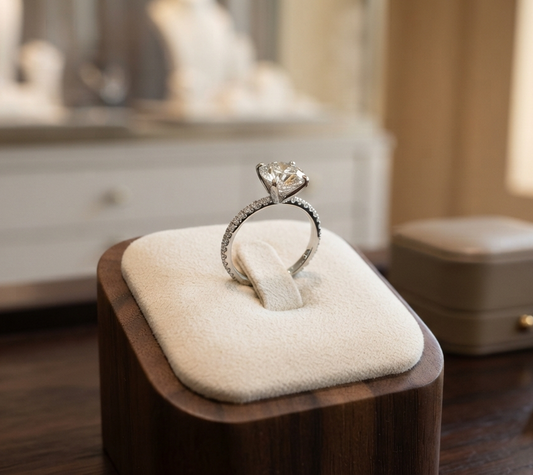
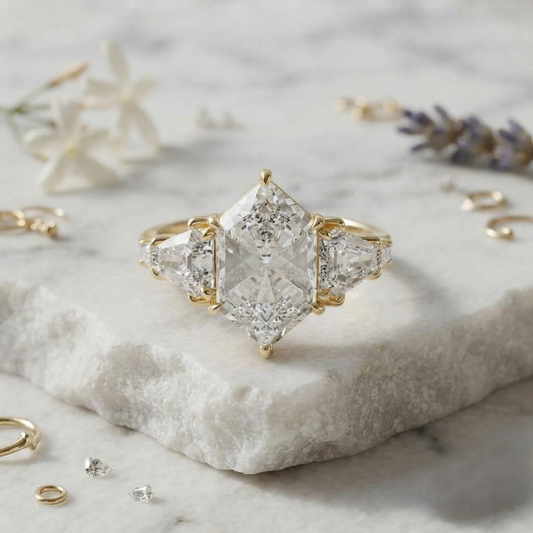
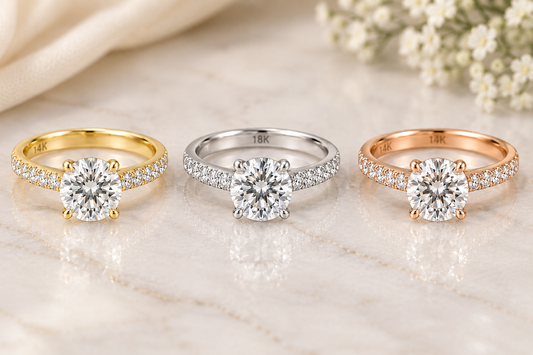
Because it contains more pure gold, 18K yellow gold often has a richer yellow tone than 14K yellow gold. The visible difference can be subtle, especially when you’re looking at a finished design rather than metal samples. White and rose gold also depend on the specific alloy and finish, so compare the actual pieces rather than assuming every item with the same karat will look identical. If you’re choosing an everyday ring, browse our Lab Grown Diamond Rings and check the metal option shown on each design.
Which is better for everyday wear?
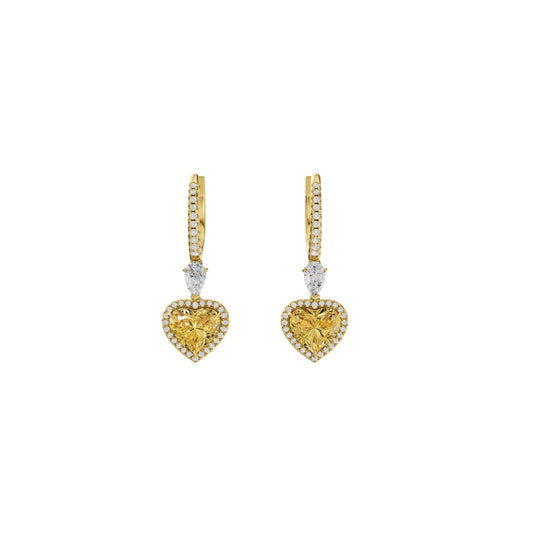
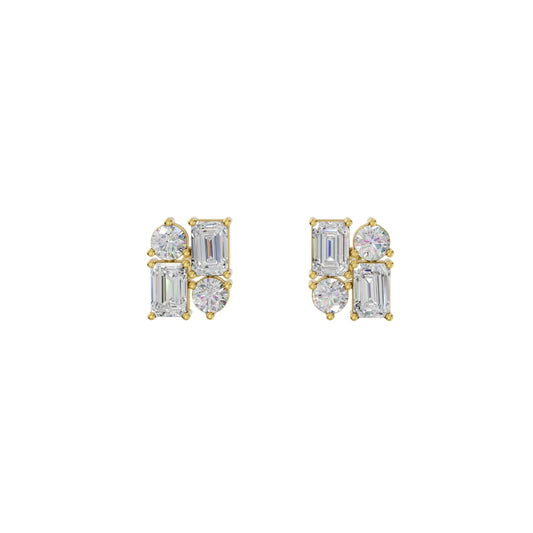
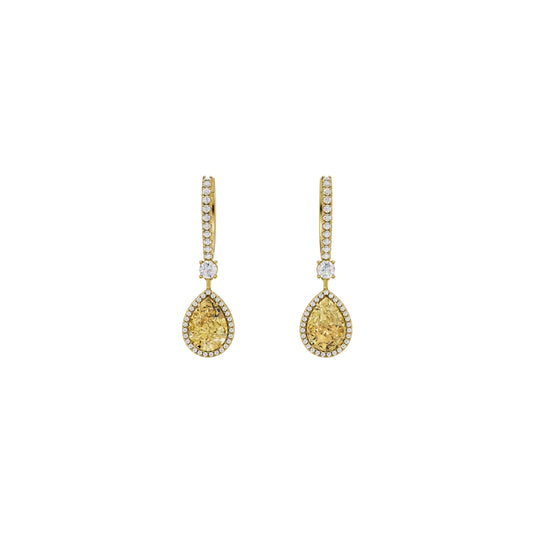
14K gold has a larger proportion of alloy metals and is often chosen for jewelry that gets frequent wear. 18K gold has a higher gold content and can appeal to someone who prefers that composition and its appearance. Neither choice is maintenance-free: rings can pick up scratches and marks over time, and durability also depends on the design, setting, alloy, and how the piece is worn. For jewelry that may have less contact with hard surfaces than a ring, compare styles in our Lab Grown Diamond Earrings collection.
What about pendants and price?
Both karats can work beautifully for a pendant. Think about the color you prefer, the chain and setting, and whether you want to coordinate it with pieces you already own. Explore our Lab Grown Diamond Pendants to see available designs and review their listed metal specifications.
With more pure gold in the alloy, 18K gold often costs more than a comparable 14K option, but the price of a finished piece also reflects its gold weight, diamonds, craftsmanship, and design. Compare the full specifications and actual prices of the items you like rather than relying on karat alone.
How to choose between 14K and 18K gold
Start with the type of jewelry and how frequently you’ll wear it. Then compare the metal composition and color, the setting, and your budget. POOJA DIAMOND offers jewelry designs in different gold options, so check the metal specification on the particular piece before deciding. You can browse All Products to compare styles across categories.
The bottom line
Both 14K and 18K gold can be excellent choices for diamond jewelry. 14K contains a lower percentage of pure gold and a larger proportion of other alloy metals; 18K contains more pure gold. Choose the piece whose appearance, listed specifications, price, and suitability for your lifestyle feel right to you.
Tags:
Previous
What Is the Best Diamond Cut for an Engagement Ring?
Next
Yellow Gold vs White Gold vs Rose Gold: Which Should You Choose?
Related articles
-
Sep 30 2026