



About Pooja Diamonds | Ethical Lab Grown Diamond Experts
Learn about Pooja Diamonds — our passion for crafting ethically sourced, lab grown diamonds with precision, innovation, and timeless elegance.
Where Brilliance Meets Tradition
Pooja Diamonds is a global pioneer in premium diamond crafting, blending innovation, craftsmanship, and timeless luxury into every piece.
With a vertically integrated manufacturing system, we ensure excellence from sourcing raw diamonds to cutting, polishing, and final jewellery making. Each piece is crafted with unmatched precision, legacy, and passion.
Our Vision
To redefine luxury through exceptional diamond artistry, creating timeless masterpieces that inspire the world.
Our Mission
Delivering ethically sourced, precisely crafted diamonds backed by innovation, sustainability, and global trust.
Our History
From a local craft house to an international diamond leader—our legacy reflects passion, precision, and innovation.
Our Specializations
01 — Artisan Craftsmanship
A fusion of traditional mastery and modern techniques—each diamond is crafted with skill and soul.
02 — Ethical Manufacturing
Conflict-free diamonds, transparent sourcing, and eco-conscious practices ensure responsible luxury.
03 — Clarity & Grading
Every diamond undergoes detailed grading for clarity, brilliance, and purity—meeting global standards.
04 — Sorting Precision
Diamonds are systematically sorted by cut, clarity, color & carat to match each client's expectations.
05 — Perfect Link (Clients)
We bridge your vision with the perfect diamond through guidance, expertise, and personalized curation.
Our Facilities

SURAT
Our advanced diamond growing & manufacturing hub where precision meets cutting-edge technology.
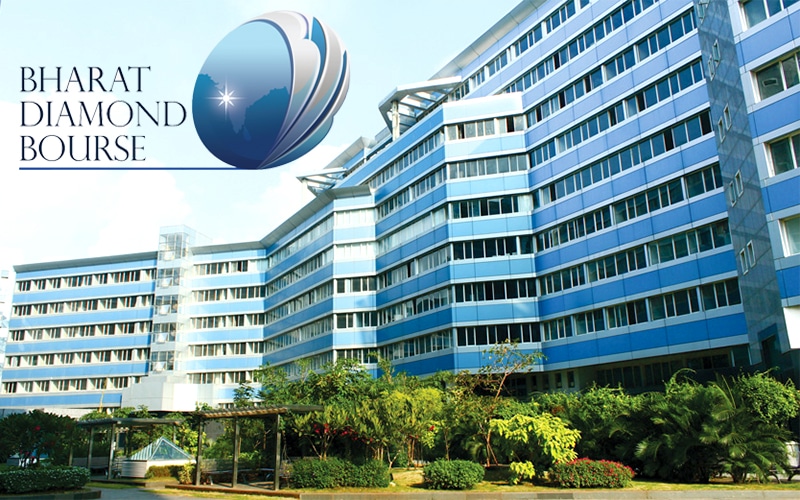
MUMBAI
Corporate headquarters managing exports, global trade, and worldwide distribution.

LOS ANGELES
International wholesale and retail operations connecting our diamonds to global clients.

HONG KONG
A key international trading point supporting our Asian wholesale, retail, and logistics operations.

CANADA
Our North American operations center, ensuring smooth distribution and client support across the region.
AUSTRALIA
A strategic hub serving Oceania with premium diamond sourcing, customer service, and regional partnerships.
Global Time Zones

Surat
--:-- --
Mumbai
--:-- --
Los Angeles
--:-- --
Canada
--:-- --
Australia
--:-- --
Hong Kong
--:-- --HOW CVD LAB GROWN DIAMOND ARE MADE?

1 — DIAMOND SEED SELECTION
The journey begins with selecting a high-quality diamond seed. This tiny seed works as the foundation of the new diamond, similar to how natural diamonds begin their growth inside the Earth. Scientists choose only the best quality seeds to ensure clarity and strength.
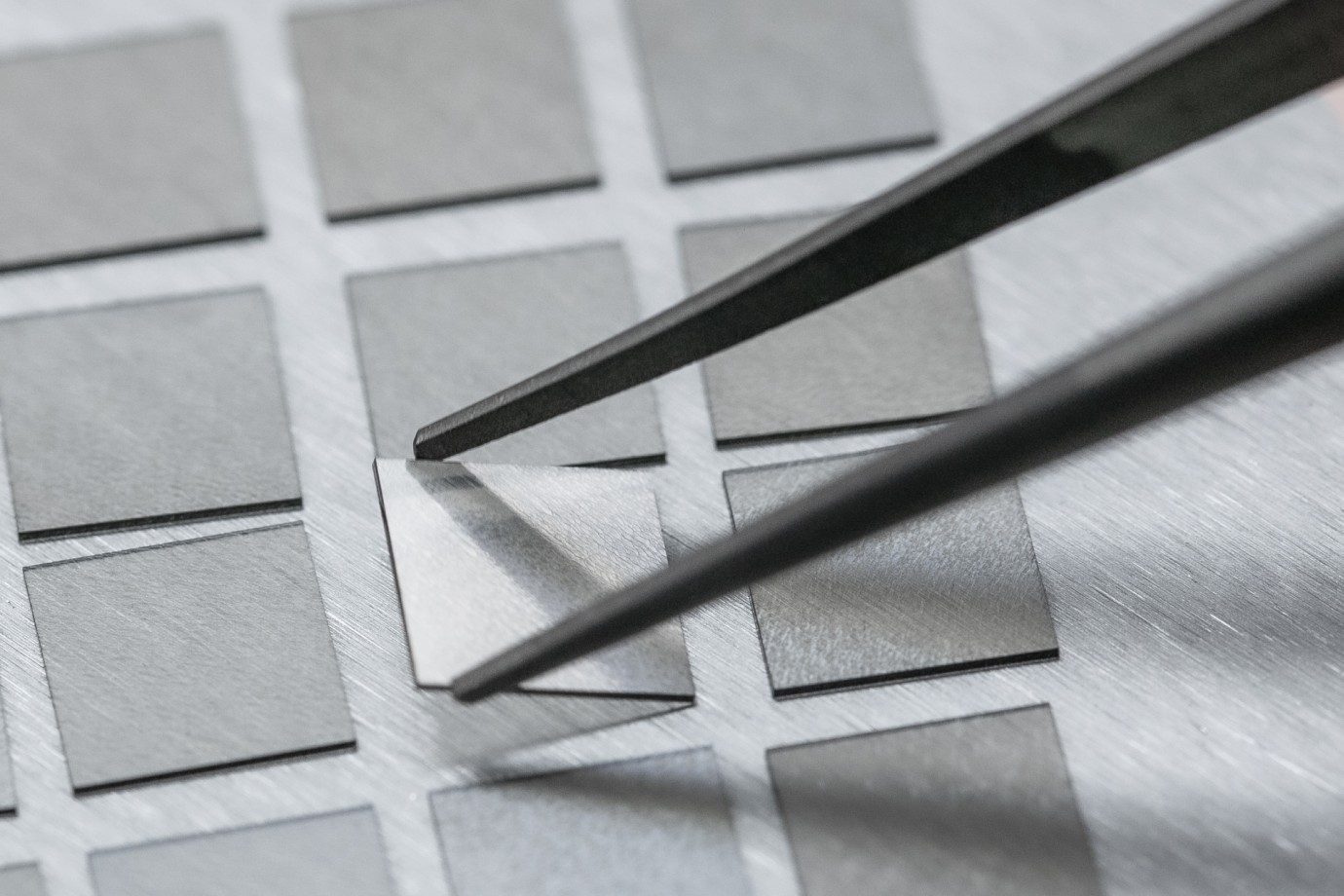
2 — CHEMICAL VAPOR DEPOSITION (CVD)
The diamond seed is placed inside a high-temperature vacuum chamber filled with carbon-rich gas like methane. At temperatures above 1500°C, the gas breaks down and carbon atoms deposit onto the seed, growing the diamond layer by layer — just like in nature but accelerated in a controlled environment.
3 — GROWTH & DIAMOND FORMATION
Over several weeks, carbon atoms keep attaching to the seed. Scientists precisely control temperature, pressure, and gas composition to achieve the desired diamond size, color, and clarity. Slowly, the diamond grows into a large crystal.
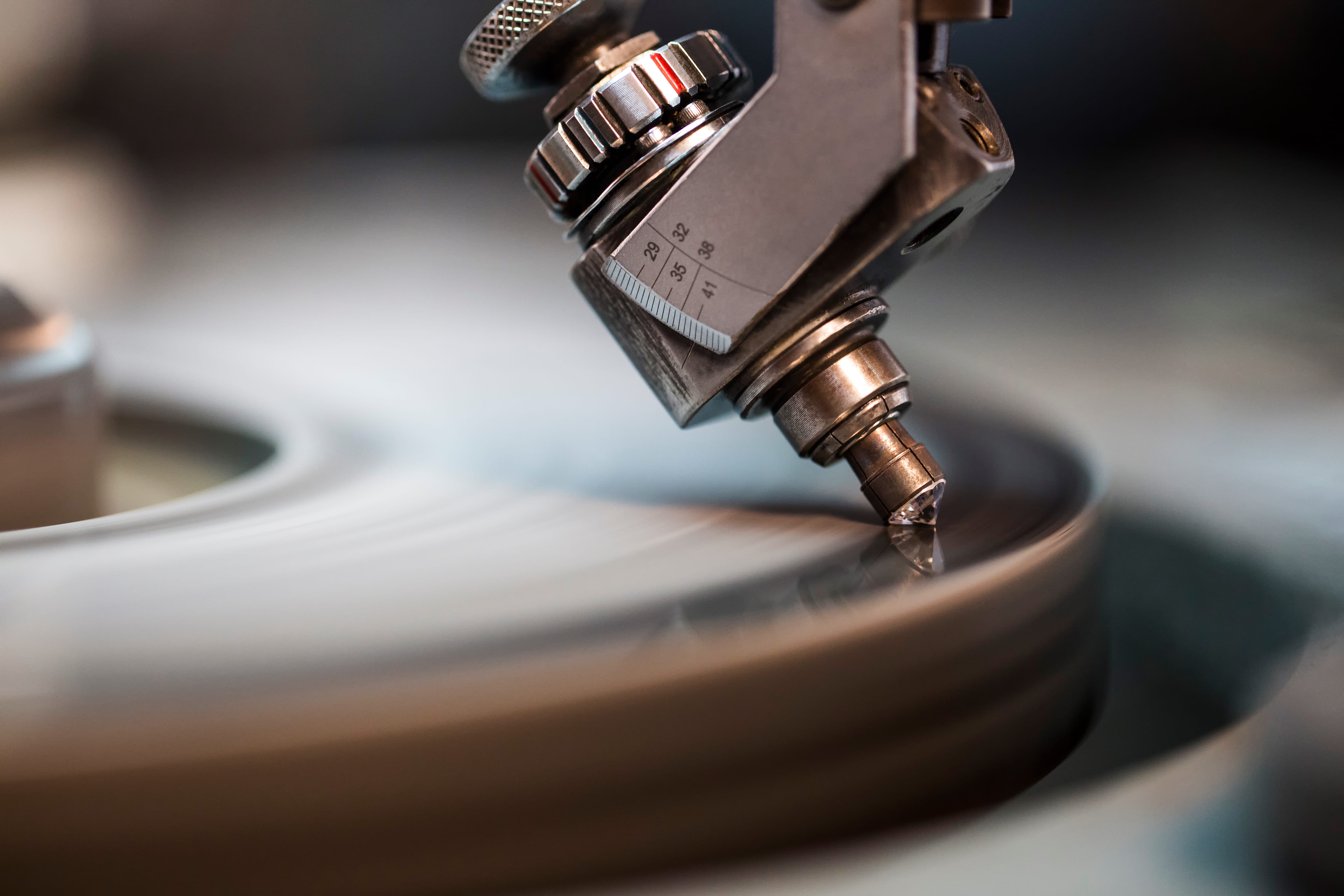
4 — CUTTING & POLISHING
After the diamond reaches full size, it is removed from the chamber. Skilled artisans cut and polish the rough stone using traditional diamond-cutting techniques, creating maximum sparkle and brilliance.

5 — GRADING & CERTIFICATION
The diamond is sent to world-certified laboratories such as GIA, IGI & SGL for full grading of the 4Cs — Cut, Color, Clarity & Carat. This ensures complete authenticity and quality assurance.

6 — FINAL INSPECTION
Expert gemologists thoroughly inspect the diamond for imperfections, verifying size, clarity, measurements, and brilliance. Any adjustments or finishing touches are completed at this stage.
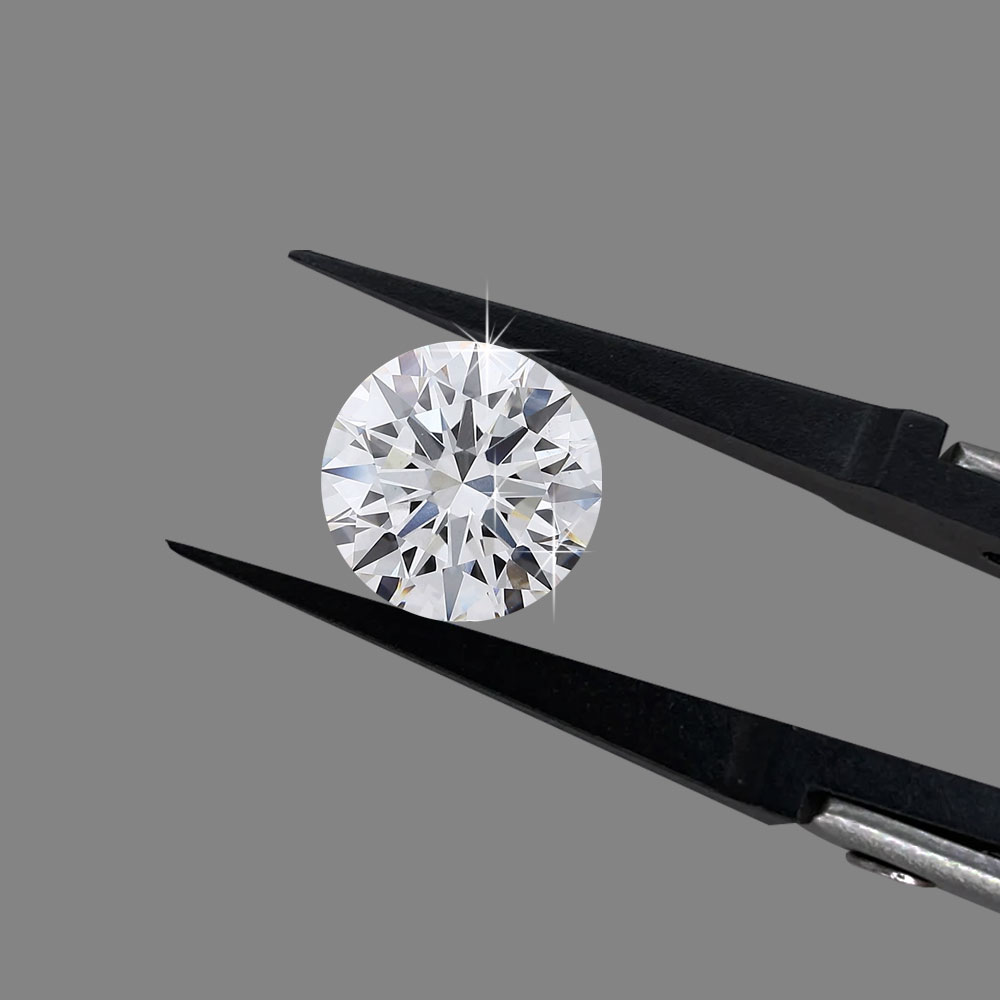
7 — QUALITY CONTROL
Strict quality control ensures that every CVD lab-grown diamond meets premium standards. Monitoring, equipment calibration, and documentation guarantee consistency and reliability in each diamond produced.
Jewellery Manufacturing Process
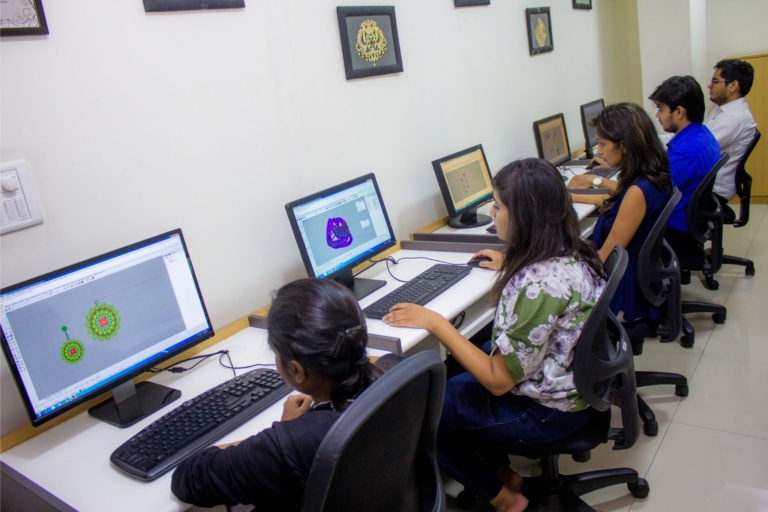
STEP 1 – DESIGNING
The process of jewellery making is no less than a magic! This entire process of the jewellery designing involves lots of steps like designing, model making to the final step of quality check.Creating a design is the first step which is involved in the process of jewellery making. The designing is the stage where the jewellery designer develops an idea of jewellery design and turns it into a reality by evaluating the idea and upon further analysis.

STEP 2 – CAD/CAM
The second stage, just after the designing stage is the CAD/CAM stage, which involves the use of CAD Software. The CAD Software is a 2D and 3D computer-aided software often used by designers which improves the dimensional accuracy and quality of the design. Also, it helps in the creation of a database for manufacturing. When the task of designing a concept gets completed by the jewellery designer, and the same is being created on the paper and designed at the system. This process of conversion of ‘concept on paper’ to the ‘system’ is done through the CAD Software, or the Computer Aided Designing technology. The CAM or the Computer Aided Manufacture software is a software which takes care of the process of machining and manufacturing, or simply we can say, to automate the manufacturing process.

STEP 3 – MODEL MAKING
The Model Making is the next stage which involves the process of the conversion of resin output from CAM to silver model (a master design which is being used to create similar pieces of jewellery through the use of rubber mould) through the process of casting.

STEP 4 – RUBBER MOULD
The 4th stage is the Rubber Mould stage which plays an integral role in the process of the production. The Rubber Mould helps in the creation of the multiple pieces of same designed jewellery. The best part of the rubber mould is that the designs remain safe, well protected and embedded within it and thus can be used to create replicas of the jewellery design in the future. The materials involved in the making of mould can vary from natural rubber, silicone to metal and the process of the mould making is labelled as ‘Vulcanizing’.
STEP 5 – WAXING / WAX TREE
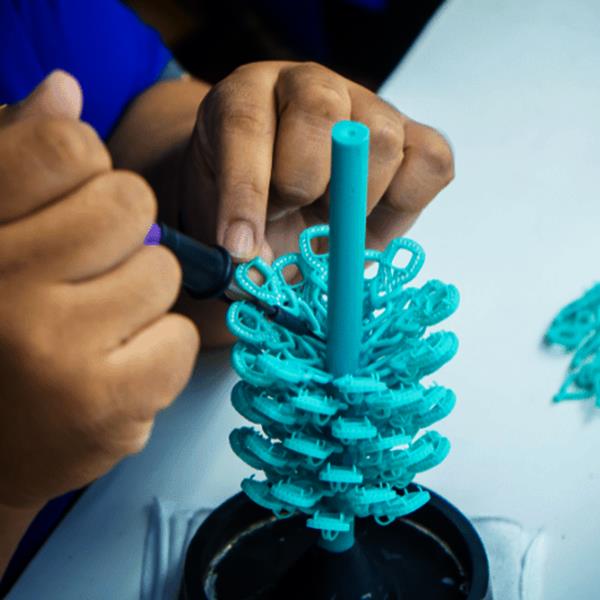
The next stage involved in the jewellery manufacturing process is the production of wax pieces. The wax pieces are produced from rubber moulds made of silver master. The process of waxing involves placing the rubber mould on the commercial wax injector machine and then pressure injected into the cavity in order to create wax models. These wax models are being used for casting.The wax pieces on a wax stem are being soldered which is called ‘treeing’. The treeing is the process where a spruce is attached to every wax piece, making an angle of approx. 45 degree with the stem. The lighter items are placed at the top of the tree, while the heavier ones are placed at the bottom of the tree.

STEP 6 – CASTING
Moving on to the next step, the jewellery manufacturing process at Pooja involves the stage of casting, which is regarded as among the most complex processes. The process of casting requires experienced and skilled casters. The entire process of casting involves placing the wax tree in a steel flask and then placing a slurry of chemical powder which takes around an hour to solidify. Afterwards, the flask is placed in an electric furnace to heat. As a result of which the wax melts and thus leaving a cavity of tree. The resulting molten metal is then poured in the flasks and is allowed to cool off. After, the molten metal is cooled, demolished and the jewellery in the form of casting is revealed.

STEP 7 – GRINDING
The grinding is the next stage involved in the process of jewellery manufacturing. The grinding involves the use of polisher which is used to grind off the nub (A nub is resulted after the process of casting; once the raw casting is clipped off from the casting tree and appears at the place where the spruce was attached with the gold piece!). The polisher utilizes the motorized grinding machine to smoothen the surface of gold piece of the jewellery. The Grinding involves the final process of the polishing, which is carried out by holding the jewellery piece against the spinning grinding wheel and thus resulting a smooth surface as required.

STEP 8 – FILING / ASSEMBLY & PRE POLISHING
The Filing is the next stage involved in the process of the jewellery manufacturing. Under Filing, the excess metal or solder is being removed from the piece. The variety of tools like files and burns are being utilized to remove casting layer and offering a smooth finish. After filing, the task of assembling is carried out which is the process of joining 2 or more components of same design using soldering technique or laser technique.Afterwards, the polishing is being carried out to give a neat and fine finish and thus enhancing the value of the jewellery piece. There are three steps involved in the polishing stage, which includes the tumbling, pre-polishing and ultra cleaning. You must note that before the diamond is set, those jewellery pieces bearing diamond, requires pre-polishing, since the diamond portions can’t be polished once the diamonds are set below the area, as it may risk the shine of the diamond.
STEP 9 – DIAMOND SETTING
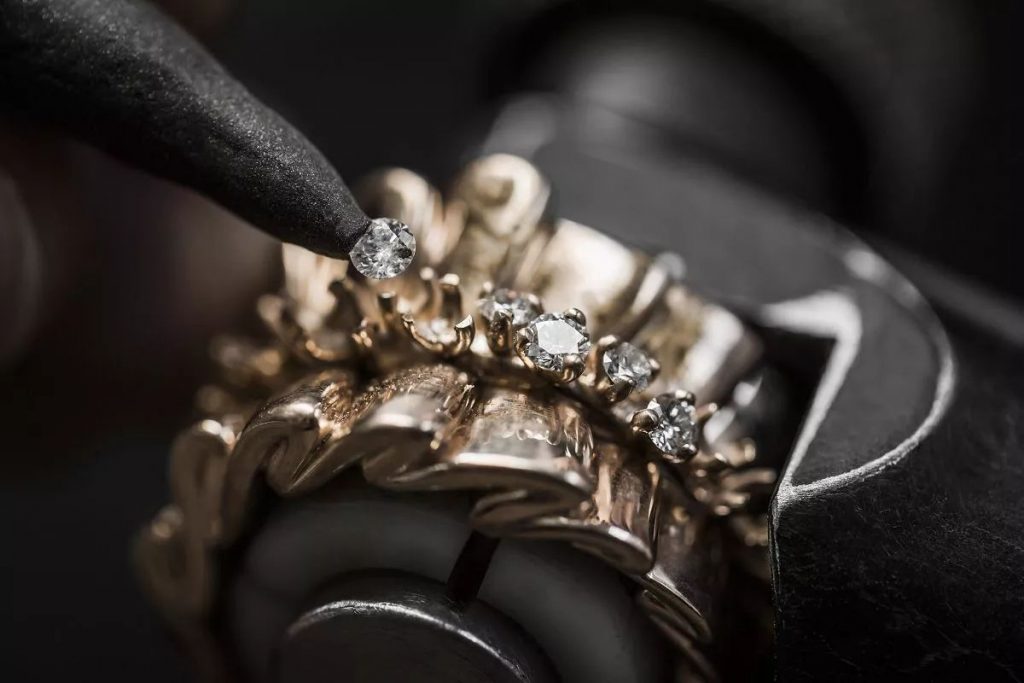
The diamond setting is the 9th stage in the manufacturing of jewellery. The diamond setting is the process of setting or attaching the gemstone in the jewellery. The diamond setting is varied in order to create different designs. Even the combination of different diamond setting is used to give a captivating appearance to the jewellery piece. The metal setting is of various kinds as mentioned just above, and the long list of the setting includes prong, plate prong, pave, bezel, pressure, bead, flush, invisible, fishtail, miracle plate and channel.
STEP 10 – POLISHING
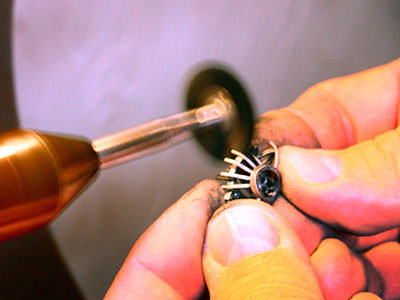
The Polishing stage is the final stage where the polishing of the jewellery takes place. The polishing is done to ensure the better shine of the jewellery, which is carried out after setting of stones. The polishing can be carried out by both means; either manual or by machine. The tools which help the craftsmen to polish the jewellery manually includes soft buff, solid buff, hair buff, single line ball buff, coin buff, platinum polishing rouse, red and green rouse (to impart shine), black lustre to remove casting or filling layers, and white lustre for the removal of roughness.

STEP 11 – RHODIUM PLATING
The Rhodium plating is the penultimate stage of the jewellery manufacturing. The Rhodium Plating involves the process of placing the Rhodium (A sparkling white colored precious metal, which provides a better resistance to the jewellery against scratches and tarnish!) on a piece of jewellery. The Rhodium is being placed on a yellow gold in order to create a visually appealing design and pattern, while the same is placed on a white gold to add whiteness to the gold (since the white gold is not so white in the pure form!).
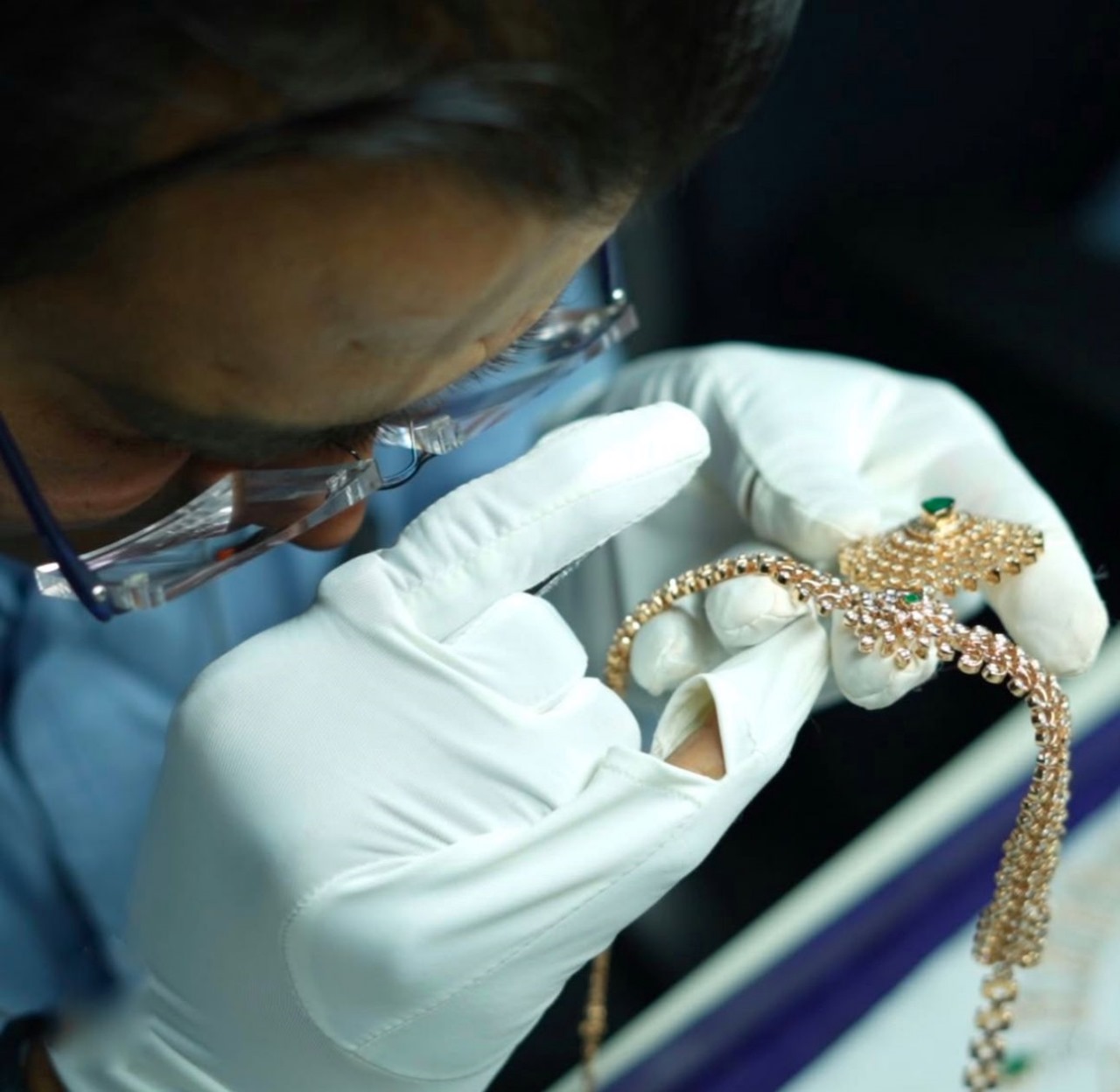
STEP 12 – QUALITY CONTROL
The final stage in the process of jewellery manufacturing is the quality control which is equally as important as other stages. The Quality control is the stage which ensures that the final manufactured product adheres to the defined set of quality guidelines and meets the standard requirements. The Quality control involves 3 methods which are measurement, visual inspection and mechanical inspection.